

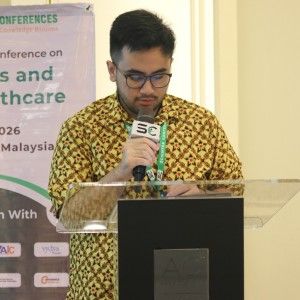
Fajrizqi Rahmandiar Muhammad
Brawijaya University, IndonesiaPresentation Title:
Treatment approaches for MDR Acinetobacter baumannii CNS in an infant: a case report on external ventricular drain vs Ommaya reservoir
Abstract
Central nervous system (CNS) infections, such as meningoencephalitis caused by A. baumannii, present significant treatment challenges, particularly when complicated by seizures. A notable management challenge in such cases is selecting the most appropriate method for cerebrospinal fluid (CSF) drainage, between the Ommaya reservoir and the external ventricular drain (EVD). However, there is limited data comparing their efficacy in neonates or infants with CNS infections, especially when further complicated by seizures and pneumonia.
A two-month-old infant was transferred to the High Care Unit (HCU) of Saiful Anwar Hospital from a general ward due to recurrent seizures. The patient had been previously diagnosed with congenital hydrocephalus and sacral meningocele. Surgical excision of the meningocele was performed, but unfortunately, it ruptured, most likely leading to an MDR Acinetobacter baumanii infection, which progressed to meningoencephalitis and pneumonia. Intravenous antibiotics were initiated, and an EVD was inserted to manage the hydrocephalus. Initially, the patient responded well, however, the EVD became clogged multiple times, forcing the medical team to switch to an Ommaya reservoir in an effort to reduce infection risk and enable intraventricular antibiotic administration. Unfortunately, the Ommaya reservoir failed to adequately address the elevated intracranial pressure, resulting in a worsening neurological condition. The clinical team decided to revert to EVD treatment to resolve the intracranial pressure and administer antibiotics directly into the ventricles. The latest EVD procedure proved successful, as the patient’s neurological condition began to improve.
This case report highlights the effectiveness of EVD in a meningoencephalitis patient with a history of congenital anomaly in the form of congenital hydrocephalus and meningocele. While the Ommaya reservoir is typically considered advantageous for intraventricular access, in this case, EVD provided better control of intracranial pressure and supported neurological recovery.
Biography
Fajrizqi Rahmandiar Muhammad is a dedicated medical student currently pursuing his Bachelor of Medicine at the Faculty of Medicine, Brawijaya University, Indonesia. He has a strong interest in developing clinical competence and is known for his effective communication skills, empathy toward patients, and ability to work collaboratively in diverse environments. Actively engaged in academic and community initiatives, he has contributed to various student organizations and volunteer programs, demonstrating leadership and organizational abilities. His academic excellence is reflected in multiple achievements, including awards and finalist positions in national literature review competitions and medical-related events. He remains committed to continuous learning and strives to contribute to improving healthcare quality through both academic and practical experiences.

Organization Location
1309 Coffeen Avenue, STE 1200, Sheridan, Wyoming 82801, USA
General Enquiry
contact@scientexconferences.com
Finance Enquiry
finance@scientexconferences.com
Call us at
USA : (+1) 669 499 3742