

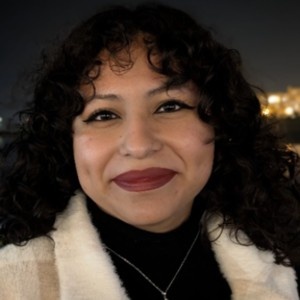
Graciela Trujillo Hernandez
University of Rochester, USAPresentation Title:
“Is the world ending?”: Parent-child conversations about the COVID-19 pandemic
Abstract
A growing body of research is looking at parent-child conversations about the COVID-19 pandemic in order to better understand what kind of information children seek and acquire from their parents about COVID-19. However, most of this prior work was collected during the first peak of infections and deaths due to COVID-19 in the United States rates (approximately around April 14th, 2020; CDC, 2023). In this study, we examined the nature of parent-child conversations at the second peak of infection and death rates in the United States (July 29th – August 10th, 2020). Parents of 3-to-7-year-old children (N = 516, 62% female, 78% white) residing in the United States were recruited using Amazon’s Mechanical Turk during July 29th–August 10th, 2020. Parents were asked to report three questions that their child had recently asked them about the pandemic as well as report how they responded to those questions. Children’s questions focused on lifestyle changes (22%), while parental responses were often about the virus (23%). Moreover, we found that parent-child conversations during the second peak of the pandemic were influenced by several child and parental factors, such that younger children were more likely to ask questions about preventive measures than older children (OR = .89, x2 (1, N = 1373) = -.12, p = .04). Meanwhile, parents with higher levels of education were more likely to encourage the prioritization of the child’s and/or family’s well-being or health (OR = 1.16, x2 (1, N = 1369) = .15, p = .04). Overall, our study demonstrates the importance of going beyond examining a single snapshot of time to better understand the nature of parent-child conversations about COVID-19 over the course of the pandemic.
Biography
Graciela Trujillo Hernández is a Ph.D. candidate in Developmental Psychology at the University of Rochester, USA working with Dr. Karl Rosengren. She is expected to complete her Ph.D. in May 2026. Her research examines how culture, religion, and social context shape children’s and adults’ reasoning about natural and biological phenomena. She uses a sociocultural-constructivist framework to investigate how families integrate scientific, moral, and spiritual explanations when reasoning about illness, death, and natural disasters. Through cross-cultural and bilingual research with minority communities in the United States and international communities, she aims to refine theoretical models of explanatory development and promote inclusive, culturally grounded approaches to cognitive and developmental science. Broadly, my work seeks to bridge developmental psychology, anthropology, medicine and religious cognition to illuminate how humans construct meaning in the face of uncertainty. Her future work aims to extend this research toward culturally responsive science education and health communication.

Organization Location
1309 Coffeen Avenue, STE 1200, Sheridan, Wyoming 82801, USA
General Enquiry
contact@scientexconferences.com
Finance Enquiry
finance@scientexconferences.com
Call us at
USA : (+1) 669 499 3742