
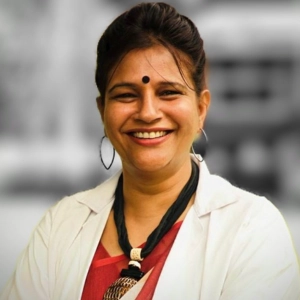
Kalpna Chaudhry
Seema Dental College & Hospital, IndiaPresentation Title:
Comparative evaluation of the efficacy of chlorhexidine, darolac, and arimedadi oil mouthwashes on salivary pH in special children: A randomized controlled trial
Abstract
Children with special healthcare needs (CSHCN) often face significant challenges in maintaining good oral hygiene, leading to an increased risk of dental problems. A crucial factor in preventing oral infections is maintaining an optimal salivary pH, as a lower pH can promote the growth of harmful bacteria. While chlorhexidine is a widely used antimicrobial mouthwash, its long-term use can cause adverse effects. This highlights the need for safer and effective alternatives, especially for vulnerable populations like CSHCN.A randomized controlled trial was conducted with 45 CSHCN aged 9-12 years from Jyoti Special School in Rishikesh, India, to compare the efficacy of three different mouthwashes: chlorhexidine (a synthetic antimicrobial), Darolac (a probiotic formulation), and Arimedadi Oil (a traditional herbal formulation). Participants were divided into three groups, each assigned a different mouthwash. Unstimulated saliva samples were collected before and after a 15-day intervention period to assess salivary pH. Participants were instructed to use their assigned mouthwash twice daily under supervision. The results showed a statistically significant increase in salivary pH across all three groups after the 15-day intervention, indicating that all mouthwashes were effective in raising salivary pH levels. Notably, Arimedadi Oil demonstrated a more pronounced increase in salivary pH compared to both chlorhexidine and Darolac. While chlorhexidine and Darolac also showed positive effects, their impact was comparatively modest. The study concludes that chlorhexidine, Darolac, and Arimedadi Oil are all effective in elevating salivary pH in CSHCN. However, Arimedadi Oil emerged as superior in enhancing salivary pH, suggesting its potential as a promising natural alternative to synthetic options like chlorhexidine. Its herbal composition and fewer reported side effects make Arimedadi Oil a potentially safer and more sustainable choice for longterm oral health maintenance in CSHCN. Further research with larger sample sizes and extended follow-up periods is recommended to validate these findings.
Biography
Dr. Kalpna Chaudhry Completed Her M.D.S. In Pediatric Dentistry In 2007 From Dr. B.R.Ambedkar University, Agra, India. She Is The Head Of Pediatric Dentistry At Seema Dental; College ,Rishikesh. She Has Done Fellowship Of International Council For Dental Research,(F.I.C.D.R.) From Liverpool.(U.K.), Diploma In Clinical Aesthetics And Oral Rehabilitation.(D.C.A.O.R) From Singapore. She Is A Life Member Of Indian Society Of Pedodontics And Preventive Dentistry (I.S.P.P.D.), South Asian Association Of Pediatric Dentistry (SAAPD). And National Medicos Oraganization (NMO). S. She Is Clinical Director In Special Smiles At Special Olympics Bharat. She Has Over 35 Publications. She Is Involved With Various Kind Of Social Services In India.

Organization Location
1309 Coffeen Avenue, STE 1200, Sheridan, Wyoming 82801, USA
General Enquiry
contact@scientexconferences.com
Finance Enquiry
finance@scientexconferences.com
Call us at
USA : (+1) 669 499 3742